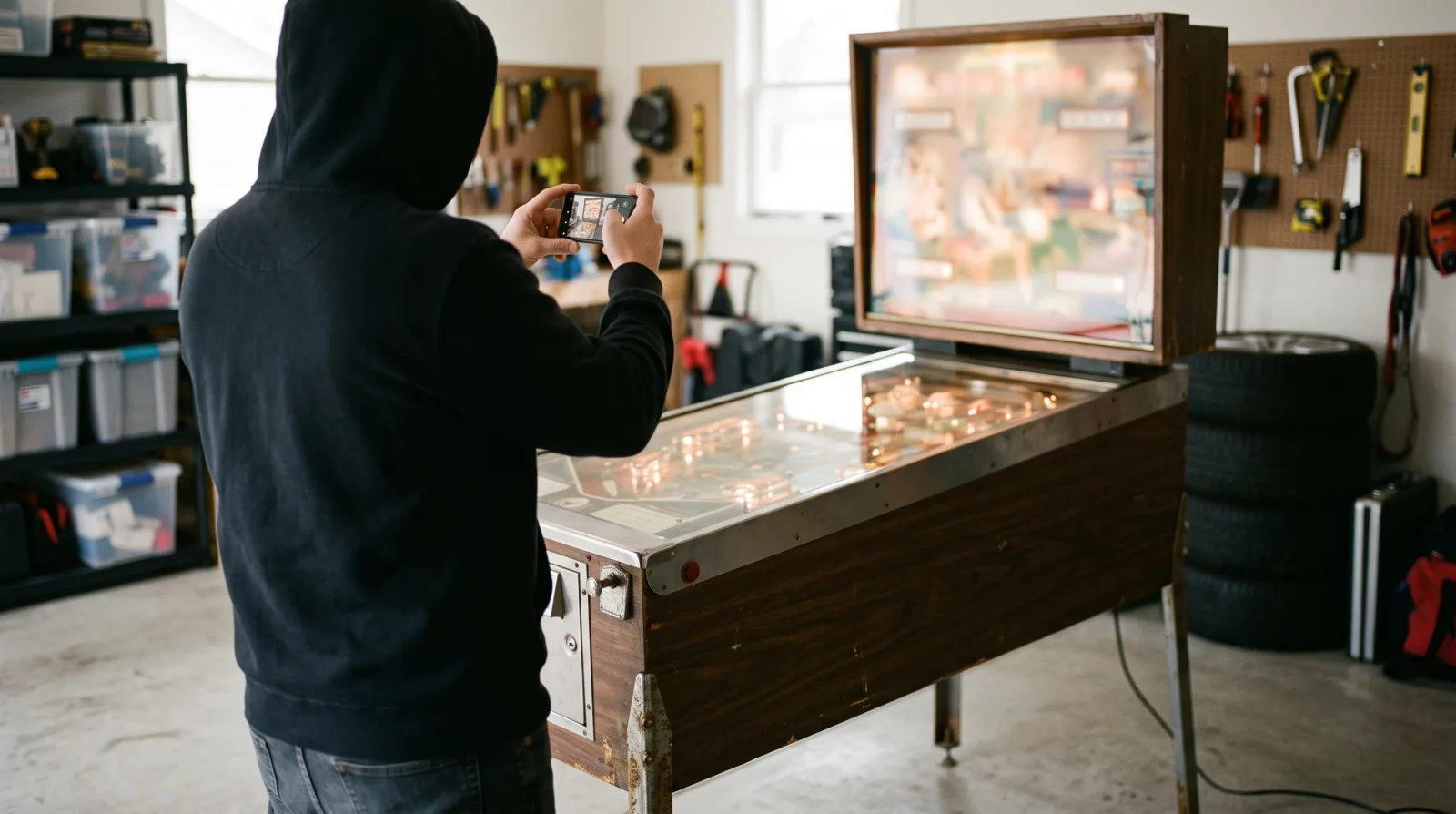
How to Sell a Pinball Machine: Private Sale vs. Dealer vs. Cash Buyer
Published: May 6, 2026 · By Christian Fernandez
There are four real ways to sell a pinball machine, and I am going to walk you through all of them honestly, including the ones that pay more than I do. I'm Christian, I run Tri-State Pinball out of Newburgh, NY, and I buy machines for cash across the Hudson Valley. I would rather you pick the right route for your situation and remember who told you the truth than squeeze anyone on a deal. So here is how each option actually plays out, with the tradeoffs nobody puts in their ads.
First, know what you are holding
Before you list anything anywhere, spend twenty minutes figuring out what your machine is and what it has been selling for. The title on the backglass, the maker, the year, and the condition set your realistic price, and sellers who skip this step either give away a valuable game or sit on an overpriced listing for six months. Our value guide walks through it step by step. One tip that applies to every option below: look at completed sales, not asking prices, because asking prices are wishes and sold prices are facts.
Also be honest with yourself about condition. Whether a machine plays a full game, whether the boards have battery corrosion, and whether the artwork is faded will come up in every negotiation you have. If the game has one cheap fix standing between it and working, our pinball repair team can sometimes make that difference before you sell, though on rough machines it is usually smarter to sell as-is and let the buyer deal with it.
Option 1: Private sale on Craigslist, Facebook Marketplace, or Pinside
The pitch: top dollar. Selling directly to another collector cuts out every middleman, and on a desirable title a patient private seller usually gets the highest gross price of any option here.
The reality: you earn that money. You write the listing, shoot the photos, and answer the same questions fifteen times. You deal with lowballers, no-shows, and the guy who commits on Tuesday and vanishes by Friday. You let strangers into your home to inspect the machine, and then you face the real problem: a pinball machine weighs 250 to 300 pounds, and your buyer expects it moved up the basement stairs. If they bring two buddies and a dolly, the risk to your walls, your railing, and their backs happens on your property. Scams are real too, especially fake payment confirmations on Marketplace, so cash in hand before the machine moves is the only rule that matters.
Best for: sellers with a desirable title, no deadline, and the patience to manage strangers. Expect the process to take weeks, sometimes months.
Option 2: eBay and online auctions
The pitch: national reach. Somewhere out there is the one buyer who wants your exact machine badly enough to outbid everyone.
The reality: pinball machines are the worst possible eBay item. Final-value fees take a real cut of your price, and then freight shipping takes over. A machine needs to be professionally packed, strapped to a pallet, and hauled by a freight carrier, which commonly runs hundreds of dollars and becomes a negotiation of its own. If the machine arrives damaged, the dispute lands on you. For rare titles with national demand, auctions can genuinely outperform a local sale. For an ordinary machine, the fees and freight eat exactly the premium you were chasing.
Best for: genuinely rare titles where national competition changes the price. Wrong for almost everything else.
Option 3: Consigning or trading to a dealer
The pitch: a professional handles the sale. A dealer either takes your machine on consignment and pays you when it sells, or takes it as a trade against something in their showroom.
The reality: dealers have to make margin, and their margin comes out of your price. On consignment, you wait, sometimes months, and the consignment cut is significant. On trade, the numbers favor the house, which is fair enough since the dealer restores and warranties what they resell, the way we stand behind the restored games on our pinball machines for sale page. A trade makes real sense in one situation: you want a different machine more than you want money. Otherwise you are paying retail-level friction for a wholesale-level check.
Best for: owners upgrading to a different game, or sellers who want zero involvement and do not mind waiting for their money.
Option 4: A local cash buyer
The pitch: speed and simplicity. One call, photos by text, a firm cash offer, and the machine leaves your house without you lifting anything.
The reality: a cash buyer pays somewhat less than a patient private sale nets, and anyone who tells you otherwise is lying to you. What you get for that difference is everything the other options make you do yourself: no listing, no strangers, no fees, no freight, no waiting, and the moving problem, the stairs, the doorways, the 300-pound cabinet, becomes the buyer's problem instead of yours. Condition also stops being a fight, since a real buyer purchases machines working or not.
One warning from inside the business: know who you are actually calling. Plenty of "we buy pinball machines" websites are national lead-generation networks that sell your information to whoever pays for it, and the person who shows up is a stranger you never vetted. Ask where the buyer is physically located. I am in Newburgh, 20 to 40 minutes from most of the Hudson Valley, and I am the same person on the phone, at your door, and counting out the cash.
Best for: estates, moves, downsizing, dead machines, and anyone whose honest goal is a fair price with zero hassle.
Whichever buyer you choose, protect yourself at the handoff. Get paid in full, in cash or verified funds, before the machine leaves the property, and write a one-line bill of sale with the date, the title of the game, and both names. It takes two minutes and it ends any argument before it starts. A legitimate buyer will never balk at either request.
The honest math, and which route fits you
Take a machine that would fetch $3,000 from a patient private buyer. On eBay, fees and freight can pull your net down by hundreds, plus packing labor. On consignment, the dealer's cut does the same, months later. A private sale might net you the full number if the stars align, in exchange for weeks of listings, strangers, and moving-day risk. A local cash buyer will offer less than that top number, in exchange for the whole thing being over tomorrow with nothing for you to do. None of those tradeoffs is wrong. Sell privately when time is cheap and the title is hot. Use auctions for genuine rarities. Trade when you want a different game. Take cash when you value your weekends, your stairwell, and a done deal.
Ready for the simple version?
If the cash-buyer route fits, here is exactly what it looks like with me: text photos of your backglass, playfield, and cabinet to (845) 597-3982, tell me the town, and you get a fast, no-obligation offer from the actual local buyer. If you like the number, we schedule it, I handle the heavy part including basements and tight stairs, and you get paid on the spot. Sell your pinball machine for cash and be done by the weekend.